
Business/Project Overview
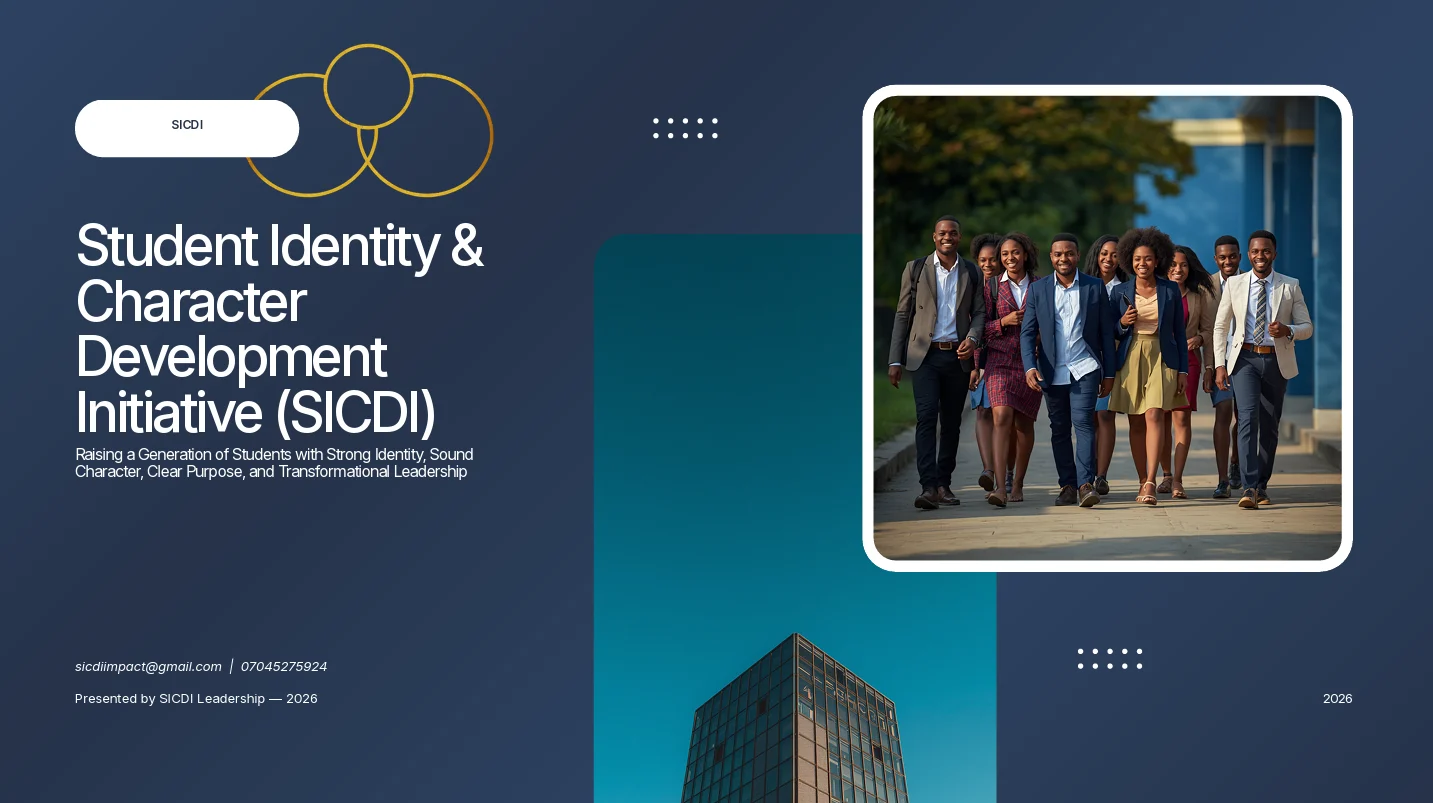
The Student Identity & Character Development Initiative (SICDI) is a youth-focused organization dedicated to empowering students and young people to discover their identity, understand their purpose, build strong character, and develop leadership capacity.
In today’s world, many students struggle with identity crisis, lack of direction, peer pressure, and declining moral values. SICDI exists to bridge this gap through mentorship, leadership training, character development, and personal growth programs.
Our goal is to raise students who are confident in their identity, grounded in strong values, focused on purpose, and equipped to positively impact their communities and nation.
The Problem
Students today face several challenges that affect their growth:
- Identity Crisis: Low self-esteem and confusion about self-worth
- Lack of Purpose: Absence of clear goals and direction
- Poor Character Development: Indiscipline, dishonesty, and negative peer influence
- Leadership Gap: Lack of responsible and value-driven young leaders
- Limited Mentorship: Few access to guidance and role models
Proposed Solution
SICDI responds through structured development programs:
- Identity & Self-Discovery Sessions
- Character Development Training (integrity, discipline, responsibility)
- Purpose & Vision Building Workshops
- Leadership Development Programs
- Mentorship & Coaching
- Personal Development Training (communication, emotional intelligence, teamwork)
- Community Impact Projects
Goals and Objectives
Short-Term Goals
- Reach 1,000+ students through programs and campaigns
- Establish SICDI presence in schools
- Organize workshops and mentorship sessions
- Build partnerships with institutions and organizations
Long-Term Goals
- Expand across Nigeria and beyond
- Develop a sustainable mentorship network
- Establish leadership academies
- Raise transformational leaders impacting society
Target Audience/Market
Primary Audience
- Secondary school students
- University students
- Youth leaders
- Young professionals
Secondary Audience
- Schools and institutions
- Parents and guardians
- NGOs and community groups
- Faith-based organizations